


Quick answer
You cannot confirm or rule out a brain tumor at home, because only a brain scan, usually an MRI, can show one. What you can do at home is notice the warning signs early: new headaches that are worse in the morning or come with vomiting, a first seizure, gradual weakness or numbness on one side, and changes in vision, speech, balance or personality. Keep a symptom diary and see a doctor promptly if symptoms persist or worsen.
Searching for how to detect a brain tumor at home usually starts with a headache that will not settle, a strange episode of numbness, or a family member who “just doesn’t seem themselves.” It is a reasonable worry. The honest truth is that no home test, app or self-examination can diagnose a brain tumor. Paying careful attention to symptoms, however, can help you recognize a worrying pattern early and reach the right doctor sooner, and that is what this guide will help you do.
Most headaches are not caused by tumors. Tension headaches, migraine, sinus problems, poor sleep, dehydration and eye strain are far more common. The aim here is not to alarm you but to separate everyday symptoms from the ones that deserve a scan.
What Is a Brain Tumor?
A brain tumor is an abnormal growth of cells inside the skull. Primary brain tumors start in the brain or its coverings and include meningiomas, gliomas and pituitary tumors; some are benign and slow-growing, while others are cancerous. Secondary brain tumors, known as brain metastases, spread to the brain from cancers elsewhere in the body and are far more common in adults than primary brain tumors.
Because the skull is a closed space, even a slow-growing benign tumor can cause symptoms by pressing on brain tissue or raising the pressure inside the head. The symptoms depend more on where the tumor sits and how fast it grows than on whether it is cancerous.
Early Warning Signs of a Brain Tumor
The National Cancer Institute and the UK National Health Service describe a broadly similar set of symptoms. Watch for these, especially if they are new, persistent or slowly getting worse.
1. Headaches With a Changed Pattern
Headaches linked with brain tumors tend to be new or different from your usual headaches, steadily worsening over weeks, worse on waking or at night, and aggravated by coughing, sneezing or bending. Nausea or vomiting along with the headache, particularly in the morning, is a stronger warning sign.
2. Seizures
A first seizure in an adult with no history of epilepsy always needs investigation. Seizures are not always dramatic convulsions. They can appear as brief staring spells, twitching of one hand or one side of the face, or an unusual smell or tingling sensation that comes and goes.
3. Changes in Vision, Hearing or Speech
Blurred or double vision, loss of side vision, difficulty finding words, slurred speech, or ringing and hearing loss in one ear can all point to pressure on specific parts of the brain or on the nerves that leave it.
4. Weakness, Numbness or Balance Problems
Gradually increasing weakness or numbness in an arm or leg on one side of the body, clumsiness, unsteady walking or frequent tripping deserve a medical examination.
5. Personality, Memory and Behavior Changes
Family members often notice these first: confusion, forgetfulness, loss of interest, irritability, unusual drowsiness or poor judgment developing over weeks.
6. Hormonal Symptoms
Pituitary tumors can cause irregular periods, milky discharge from the nipples, unexplained weight gain, excessive thirst or gradual changes in the hands and facial features.
How to Detect a Brain Tumor at Home: A Practical Symptom Checklist
While you cannot diagnose a tumor yourself, you can gather information that makes your doctor’s assessment faster and more accurate:
- Keep a symptom diary. Note the date, time, duration and severity of each headache or episode on a scale of 1 to 10, what you were doing, and whether there was vomiting, a change in vision or weakness.
- Look for patterns. Are headaches worse in the morning? Do they wake you up? Are they becoming more frequent or needing more painkillers?
- Ask family members to observe. Changes in speech, memory, mood or walking are often easier for others to notice.
- Film an episode if it is safe. A short phone video of a suspected seizure helps a neurologist enormously.
- Write down your medical history. Include any past cancer, since cancers of the lung, breast, kidney and bowel, as well as melanoma, are the most common sources of brain metastases.
- Do not rely on painkillers. Taking more and more tablets can mask a problem that is getting worse.
Think of this checklist as preparation for a doctor’s visit, never as a replacement for one.
Red Flags: When to Go to the Emergency Department
No attempt to detect a brain tumor at home should ever delay emergency care. Call 108 or go to the nearest emergency department straight away if you or a family member has:
- A sudden, severe, “worst ever” headache
- A seizure lasting more than five minutes, or repeated seizures
- Sudden weakness, facial drooping, slurred speech or confusion, which can also be signs of a stroke
- Sudden loss of vision or double vision
- A headache with fever, a stiff neck and drowsiness
- Any loss of consciousness
These symptoms need urgent assessment whether or not a tumor turns out to be the cause.
How Doctors Actually Diagnose a Brain Tumor
Once you have tried to detect a brain tumor at home by carefully noting your symptoms, a doctor confirms or rules it out through these steps:
- Neurological examination: checks of reflexes, strength, coordination, sensation, hearing, vision and memory.
- Eye examination: swelling of the optic disc, called papilledema, can reveal raised pressure inside the skull.
- MRI with contrast: the most accurate scan for detecting and mapping brain tumors.
- CT scan: faster and widely available, often used in emergencies or when MRI is not possible.
- Biopsy or surgery: a tissue sample confirms the exact tumor type and grade, which guides treatment.
- Whole-body evaluation: if the tumor looks like a metastasis, a CT or PET-CT scan searches for the original cancer elsewhere.

Brain Metastases: Why Cancer Patients Need Extra Vigilance
For people already living with cancer, new neurological symptoms need special attention. Brain metastases can appear months or even years after the original diagnosis, and catching them early widens the treatment options.
Patients who have received lung cancer treatment in Hyderabad are advised to report persistent headaches or balance problems early, because some lung cancers have a known tendency to spread to the brain. The same applies after breast cancer surgery and treatment, particularly for HER2-positive and triple-negative types, and during follow-up for colon and rectal cancer or kidney and other urological cancers. Tumors of the sinuses, skull base and nasopharynx, managed as part of head and neck cancer care, can also cause facial numbness, double vision or headaches by growing close to the brain.
Routine blood markers, such as the ESR level in cancer patients, cannot detect spread to the brain, so symptoms and imaging remain the key. When brain metastases are found early, focused radiation (stereotactic radiosurgery), surgery and modern targeted drugs tend to work better.

Which Doctor Should You See?
If your efforts to detect a brain tumor at home have turned up worrying symptoms and you have no history of cancer, start with a general physician or neurologist, who can examine you and order an MRI. Confirmed brain tumors are treated by neurosurgeons, neuro-oncologists and radiation oncologists working together. If you are already under cancer care, inform your oncologist straight away.
Dr. Anvesh Dharanikota’s practice at Arete Hospitals, Gachibowli, offers surgical oncology services for cancers across the body and discusses suspected brain involvement with neurosurgery and radiation oncology specialists through multidisciplinary tumor boards. You can also read patient testimonials about their cancer care experience or browse common questions about cancer surgery and follow-up.
The Final Word
Learning how to detect a brain tumor at home really means learning which symptoms to take seriously. Most headaches are harmless, but a changing headache pattern, a first seizure or steadily progressive neurological symptoms should lead to a prompt medical evaluation and, when advised, an MRI. Early assessment brings either reassurance or a head start on treatment, and both are worth having.
Frequently Asked Questions
No. There is no reliable way to detect a brain tumor at home, because only a brain scan, usually an MRI with contrast, can show one. At home you can track symptoms such as headaches, seizures, weakness or vision changes in a diary and share it with your doctor.
Common early signs include new or worsening headaches that are worse in the morning or come with vomiting, a first seizure, blurred or double vision, trouble with speech or balance, weakness or numbness on one side, and changes in memory or personality.
See a doctor if a headache is new after the age of 50, keeps getting worse, wakes you from sleep, worsens with coughing or bending, or comes with vomiting, confusion, weakness or vision problems. A sudden, severe worst-ever headache needs emergency care immediately.
An MRI scan with contrast is the most accurate imaging test. A CT scan may be used in emergencies. The exact type of tumor is confirmed by examining a tissue sample obtained through biopsy or surgery.
Yes. Brain metastases most often come from lung cancer, breast cancer, melanoma, kidney cancer and colorectal cancer. People with a history of cancer should report new headaches, seizures or neurological symptoms to their oncologist promptly.
Start with a general physician or neurologist, who can examine you and arrange an MRI. Brain tumors are treated by neurosurgeons, neuro-oncologists and radiation oncologists. If you already have cancer, contact your oncology team first.
Medical disclaimer: This article is for general education and does not replace a personal consultation. Cancer care is individual, so please discuss your reports, symptoms and treatment options with a qualified specialist before making any decision.
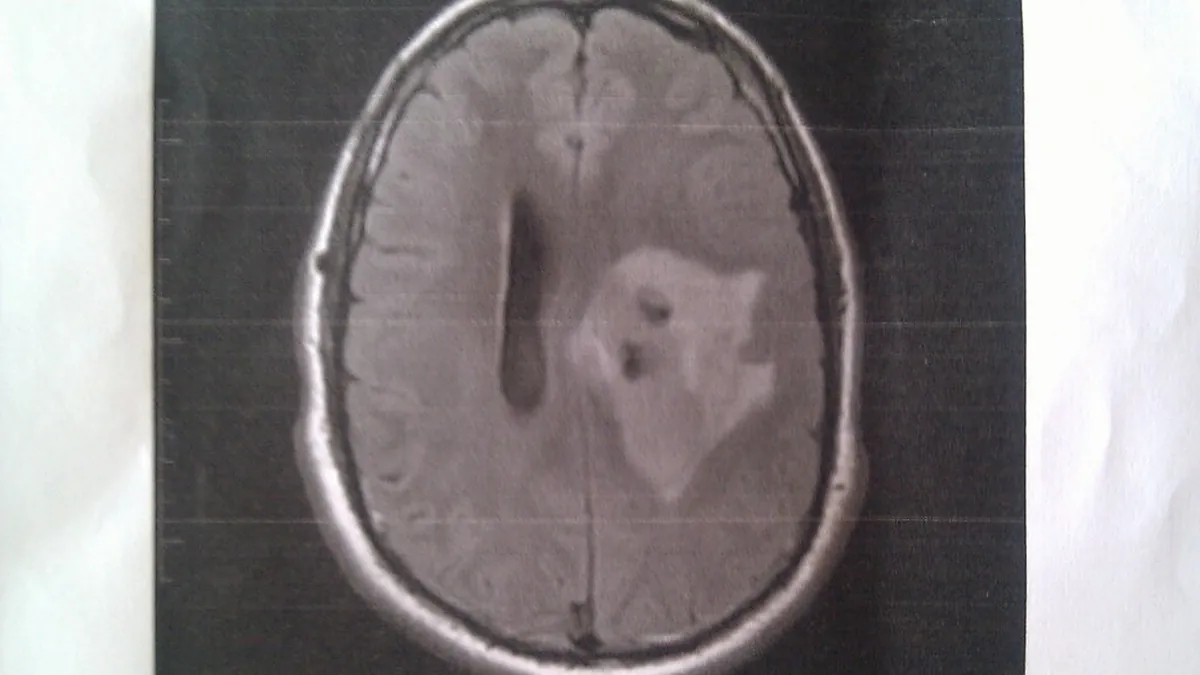
Image credits: Brain tumor MRI scans by mathrock, CC BY-SA 2.0 · Eye Examination @ Optica Carmit by Tal Glick, CC BY-SA 4.0 · Doctor consultation by ILO Asia-Pacific, CC BY-SA 4.0 · migraine-headache-pain.jpg by r.nial.bradshaw, CC BY 2.0